Wednesday, 7 December 2011

Radio Trailer Script

The radio advert was only to be around thirty seconds in length, but we were still required to produce a script for it for the narrator to read. This script can be viewed below.


Vox Pops - Favourite Takeaway: "Chinese, Indian, Errr... Chinese?"

Voice Over: "We are all familiar with the idea of a takeaway, but what impact is this having on teenagers?"

Interview with Anhar: "Most of our food is freshly cooked by fresh ingrediants."

Voice Over: "And what do adults think about it?"

Interview with Jan: "I'd say that it is acceptable to have a takeaway maybe once a month."

Voice Over: "To find out more, tune in to watch Tasty Takeaways on Thursday at 8pm. Only on Channel 4.

Music Bed: "Weird Al" Yankovic - Eat It

Tuesday, 6 December 2011

Codes and Conventions of Radio Trailers


- The duration is usually between 15 to 60 seconds, with only the necessary information provided in a short amount of time
- Everything is appropriately chosen towards the target audience to make it more appealing to them - things such as previews of interviews are used to make them want to tune in and listen to the entire thing
- The same narrator from the documentary is used for the voice over to create consistency and anchor meaning
- Audio clips are used from within the documentary to show the relationship between the two and to show consistency
- Usually short and simple: Scheduling, Broadcaster and strap line so listeners are able to remember the essential details
- A music bed is used to make the advert memorable for listeners
- The voice over and music used is easy to understand, upbeat and clear so listeners are more likely to be persuaded into watching the program
- The language used is aimed to suit the topic or the target audience
- Generally utilise the key qualities of the product (documentary) to give listeners an incentive to tune in and watch it

Thursday, 1 December 2011

Voice-over Script


Documentary Narration

1. From intro until first interview clip (approx. 7 seconds)
“Takeaways – Britain loves them! These quick and easy meals are a huge hit with teenagers and adults alike as they provide a simple alternative to a normal meal – but what is it that makes them so appealing? “

      2. From first interview to first vox pops clip (approx. 8 seconds)
“Takeaway meals are the first choice for thousands when they need a meal in a hurry, and they suit teenagers for their practicality. There are many different types of takeaway heralding from many cultures including Indian and Thai, but what’s the public’s favourite?”

      3. From first vox pops clip to interview with Heather (approx. 19 seconds)
“While a takeaway may be a quicker and less time consuming way of getting a meal, cooking your own meal does have many advantages: home cooked meals are much cheaper – we compared a supermarket ready meal to a similar takeaway and found that it was over £5 cheaper with a lower content of unhealthy additives such as fat, sugar and salt. All of this considered, why are takeaways still so popular, especially with teenagers?”

      4. From second clip of Janet to second vox pops (approx. 15 seconds)
“The simplicity and convenience of takeaways would appear to be the most justifiable reason for people ordering them, with takeaways seemingly being a lazy excuse due to factors such as cost and health. This considered, do teens prefer to order takeaways over cooking their own meals?”

      5. From vox pops to next clip of Heather (approx. 6 seconds)
“So do the youth of today really not consider the financial and diet issues associated with takeaways when they order one?”

      6. From clip of Heather to Just Eat advert (approx. 5 seconds)
“Takeaways are becoming increasingly easier to order in the modern day, with takeaway websites such as JustEat.com allowing people to order a takeaway online in just a few clicks.”

      7. From Just Eat advert to first clip of Anhar (approx. 2 seconds)
“It’s not just the simplicity that attracts thousands either – many takeaways offer special deals.”

      8. From clip of Anhar to next vox pops (approx. 5 seconds)
“So despite their flaws, takeaway meals also have many advantages that make them so popular to so many people – but how frequently do they have a takeaway?”

      9. From next clip of Janet to next clip of Anhar (approx. 9 seconds)
      “Takeaways are now a main feature of modern society, providing meals and jobs for millions worldwide. We caught up with Anhar Miah, owner of The Raj restaurant, to get an insight onto working in the industry as well as his opinions on takeaways.”

      10. In between Anhar interview (approx. 7 seconds)
“Keeping customer service good is certainly a key part of the takeaway business, to keep customers coming back for more. We also asked Anhar about The Raj’s most popular meals, and how they promote their business.”   

      11. From Anhar interview to Burger King advert (approx. 4 seconds)
“The promotion of takeaway meals is an important part of the industry, with mainstream restaurants such as McDonald’s and Pizza Hut relying heavily on advertisement – bus does this sort of promotion attract the public?”

      12. Over Burger King advert (approx. 4 seconds)
“Takeaway companies want advertisement to play a pivotal role in the decision to buy takeaway, with restaurants advertising new meals and special offers to encourage people to shop there”.

      13. From Burger King advert to ending montage (approx. 5 seconds)
“The vast variation of the takeaway industry is what keeps people coming back for more – there are so many different types of meal with a variety of ways to get them.”

Wednesday, 30 November 2011

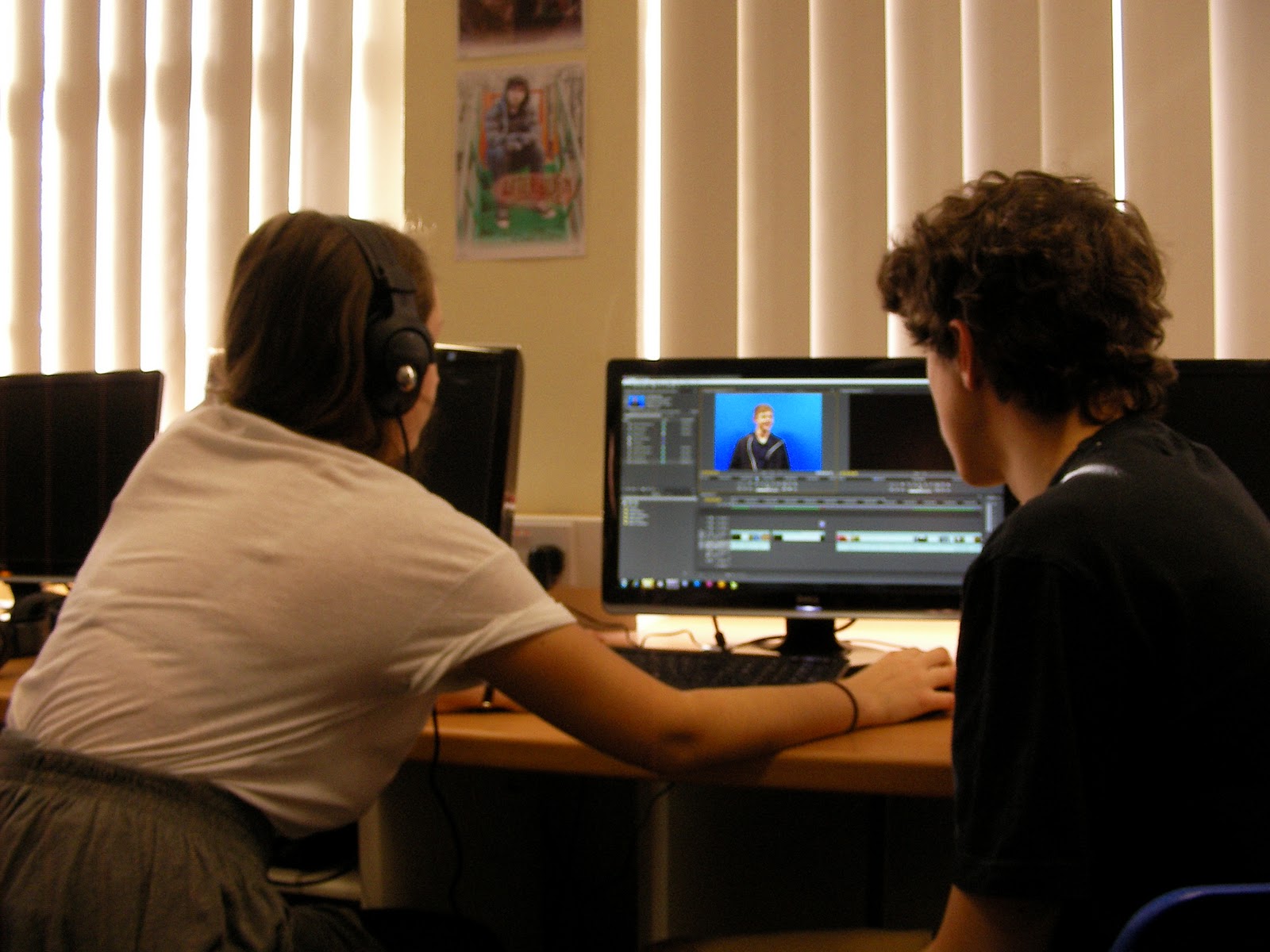
Editing Diary


I also kept track of my group's progress during the editing process.
  • We began by creating a project on professional video software Adobe Premiere Pro called 'Takeaways'.
  • We then captured all of the footage from the tape and arranged them on the timeline.
  • We then gave the clips titles so that we would be able to identify them at a glance.
  • We watched each clip and chose which was the best take for each one based off the sound and image quality.
  • Once we had chosen the best take we edited them down, cutting any un-needed footage off the start and end of the clips and made a note of the timings on our edit decision list.
  • After every shot was picked and named we arranged them into a rough cut on the timeline in order.
  • We then added graphics for the opening titles and also titles for people when they are introduced. 
  • We arranged the cutaways in a logical manner so that they were to be placed around a clip that they related to.
  • We found that we had an issue that we were running low on clips for use as cutaways. As a result, we decided to use archive footage by downloading footage from the internet of things such as television adverts.
  • We then edited these clips and placed them appropriately on the timeline.
  • We also removed some of the less satisfactory cutaways and replaced them with archive footage when it was deemed more relevant. 
  • We began editing the sound, still on Adobe Premiere Pro, once we were satisfied enough with the actual video.
  • We changed the sound levels for interviews to remove background sound and to make the speaker as clear as possible. We also removed any sound from shots like cutaways as it would not be needed and helped clean up the timeline.
  • We found a song to use for the music bed "Eat It" by 'Weird Al' Jankovic and inserted it into the documentary, fading it in and out when needed (for example, we faded it out completely during interviews) and sometimes creating a loop with the riff to go underneath some clips.
  • We made sure that sound transitions were smooth and edited the opening sequence so that the images synchronised with the drum beat as a match on action.
  • Once we felt that our documentary was almost finished, we scripted the narration and uploaded it to our blogs.
  • We recorded the voice-over and inserted it into the designated spaces that we had reserved on the timeline for it. In some cases the speech had to be edited or parts had to be removed so that it would fit in properly. 
  • We checked through the documentary and got other's feedback. We made a few last changes to the sound and rearranged a few clips before exporting the video as an AVI file.


Blue screen editing was done in Adobe Premiere Pro, using the 'chroma key' tool in the 'video effects'.

We had a problem with having too much on the timeline at once - if I were to do this again I would be sure to keep all the clips and footage more carefully organised.

All of our documentary editing was done on Adobe Premier Pro, including the sound.

We planned in advance for the inclusion of the narration by leaving spaces on the timeline in the audio.


During the editing process I was sure to keep my editing diary up to date along with other documents such as the edit decision list being included on my blog. 

Tuesday, 29 November 2011

Edit Decision List

Using our logging sheets, we were able to go through our footage and decide how and what was going to be edited. We went through our footage and made notes of where about in the footage the different clips were and made notes of them on the edit decision list so that we would be able to find and edit them efficiently.  


Saturday, 19 November 2011

Copyright Issues

Emails that were sent to recieve Copyright permission:

To Whom It May Concern,

I am writing to you to request copyright permission for our student documentary which we would like to include  short segment of Eat It - "Weird Al" Yankovic, this video will only be shown to the exam board and will not gain any financial profit. Thank you.

A2 Media Students at Priestley College; Sophie Riley, Daniel Orr, Robert Young and Samuel Taylor


To Whom It May Concern,

I am writing to you to request copyright permission for our student documentary which we would like to include  short segment of a Just Eat advertisment, this video will only be shown to the exam board and will not gain any financial profit. Thank you.

A2 Media Students at Priestley College; Sophie Riley, Daniel Orr, Robert Young and Samuel Taylor


To Whom It May Concern,

I am writing to you to request copyright permission for our student documentary which we would like to include  short segment of a Burger King advertisment, this video will only be shown to the exam board and will not gain any financial profit. Thank you.

A2 Media Students at Priestley College; Sophie Riley, Daniel Orr, Robert Young and Samuel Taylor

Wednesday, 2 November 2011

Logging Sheets

We logged all of our footage and filled out the logging sheets in order to make note of where about in the footage each clip was so that we would be able to find it easily, what was contained in the clip, how long it was and whether it was a good take or not. This allowed us to keep track of all of the footage that we had shot with a reminder of what the shot was like, and allowed us to easily see whether the shot was worth using or not.